
Beyond decoration: Visual metaphors as cognitive tools
Welcome to the world of 'Your Body, Your Life,' where every image serves a purpose. The visual metaphors in our book are instructional tools, not mere decoration. They are intentionally designed to make complex emotional and social concepts concrete, structured, and easier to process for young minds. They serve as cognitive scaffolding, supporting deep comprehension rather than distracting from it. This isn't just cute art; it's a bridge to understanding.
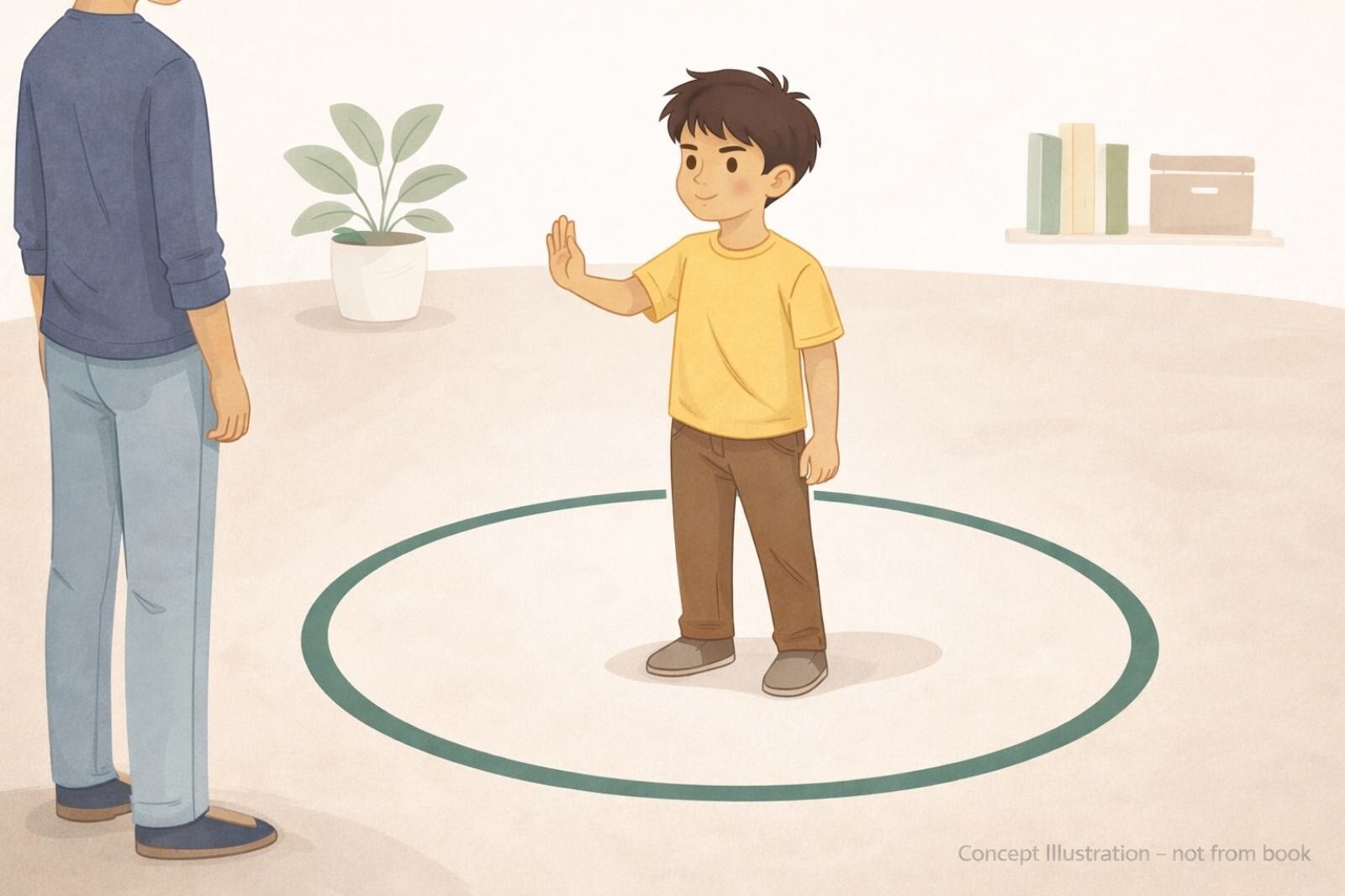
Drawing the line: Understanding personal boundaries
One powerful metaphor shows a person physically drawing a boundary line around themselves. This visual makes the abstract idea of personal limits and consent tangible and measurable. It helps children understand that their body and personal space belong to them, giving them a way to visualize and assert their boundaries effectively.

Healing hearts: Navigating emotional pain
Another significant visual features a damaged heart asking for help, illustrating emotional pain and the experience of rejection. This metaphor teaches children that it's okay to seek support during difficult times. It separates feelings from identity, reinforcing the message that hurt does not equal worth.
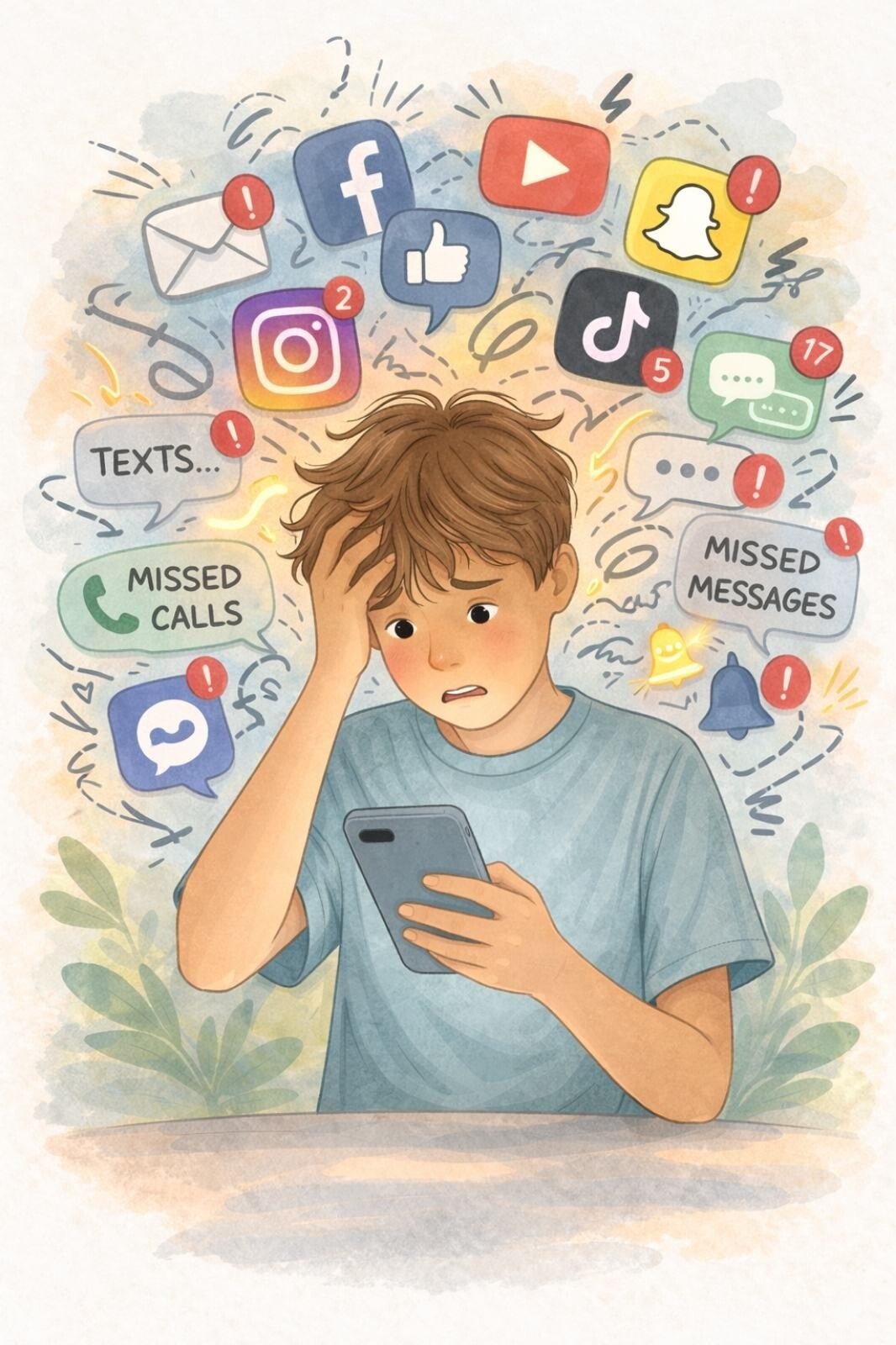
Navigating the noise: Understanding media overwhelm
We also illustrate the concept of media overwhelm with a visual showing messages and notifications piling up around a person. This helps children clearly see how constant input from screens and devices can impact their focus, mood, and decision-making abilities. It's a representation of a complex modern challenge.
Clarity for literal thinkers and neurodivergent children
For people who are literal thinkers or neurodivergent, processing abstract information can, at times, be challenging. Our visual metaphors bridge this gap by translating complex social and emotional concepts into observable actions or objects. Instead of relying on abstract language like 'imagine how it feels,' our illustrations provide a visual anchor. It's important to note that while we use visual metaphors intentionally to clarify context or present sensitive topics non-graphically, the book also includes many literal illustrations where realism is most appropriate.